
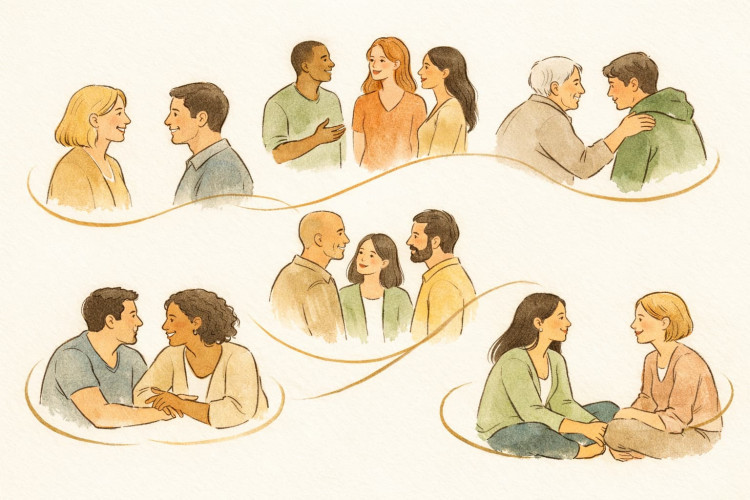
Many people believe that the foundation of a relationship is love, chemistry, or shared history. Psychology, however, tells a different story. The uncomfortable truth most people avoid is this: if you stay in a relationship with someone you do not respect, you are slowly abandoning yourself. It doesn’t matter if there is attachment, comfort, or history. Without respect, the relationship cannot thrive.
Respect is not a decoration or a bonus; it is the psychological structure that determines how people treat each other when challenges arise. It shapes conflict resolution, boundary-setting, communication, and overall emotional safety.
Without respect, relationships often devolve into patterns of control, contempt, or tolerance. These dynamics may allow interaction to continue, but they drain energy, erode trust, and create emotional distance. Over time, even strong feelings like attachment or loyalty cannot compensate for the absence of respect.
While people frequently ask, “Do they respect me?” a more crucial question is often ignored: Do I respect them?
Respect is not about liking someone. It is about recognizing the qualities that earn admiration and trust: integrity, accountability, self-awareness, and alignment with your values. When these qualities are missing, your mind begins to rationalize, explaining away behavior with thoughts like, “They’re just stressed,” or “They’ll change.” But deep down, your intuition knows the truth: you do not respect them.
Even when respect is missing, many remain in relationships due to fear of loss, identity investment, attachment patterns, or hope. Fear of losing a familiar connection can override the desire for alignment. Years of shared experiences can make leaving feel like admitting a mistake. Attachment patterns, shaped by early experiences, may make disrespect feel familiar. And hope often masks reality, convincing us that someone will become the person we wish they were rather than who they are.
Respect is not something you negotiate into a relationship. It is something you bring into a relationship from the start. You cannot create it through effort, loyalty, or sacrifice. Respect naturally arises when both parties recognize value in each other: character, integrity, self-awareness, accountability, and alignment.
Trying to repair a relationship that never had respect is like patching a broken foundation — it may appear stable for a while, but eventually, it will crumble.
Staying in a relationship without respect creates an internal conflict. One part of you sees reality clearly, while another part tries to maintain the connection. This split produces stress, emotional exhaustion, passive resentment, and communication breakdown. The deepest cost is the erosion of self-respect, because tolerating misalignment teaches your mind that your values are negotiable. Self-respect is the first pillar of relational health; it determines what you accept and what you refuse.
Many believe respect grows after love. In reality, the healthiest relationships follow a different order: Respect comes first, followed by trust, emotional safety, deeper connection, and then love or loyalty. Without respect, all other relational elements — trust, closeness, or admiration — become unstable.
To evaluate any relationship, ask yourself one honest question: Do I genuinely respect this person?
Focus not on attachment, comfort, or shared history, but on whether you truly respect the way they think, behave, and live. Your answer will reveal the alignment — or misalignment — more clearly than any other metric.
If you feel uncertainty, try this exercise:
List qualities in the person that earn your genuine respect.
List behaviors that undermine your respect.
Define the boundaries required for a healthy connection.
Seeing these patterns on paper often clarifies whether the relationship strengthens or drains you.
You cannot build a healthy, sustainable relationship with someone you secretly do not respect. Respect is not optional. It is the foundation. When it exists, conflicts can be navigated, trust can grow, and deeper connection can flourish. When it is absent, problems multiply.
This principle applies universally — to friendships, family relationships, professional collaborations, leadership dynamics, and romantic partnerships alike. Choosing alignment with respect protects your energy, maintains self-respect, and sets the stage for lasting, meaningful connections.
Strong relationships begin not with communication techniques or strategies, but with radical honesty about the qualities you value in others. When you recognize respect — and refuse to ignore its absence — your relationships naturally transform. You stop chasing connection and start choosing alignment.
If you want guidance in understanding the patterns shaping your relationships and emotional responses, you can book a free consultation at holisticaxis.com.
Main Pages

© 2026 Holistic Axis. All Rights Reserved.